Renato Colizzi SJ
A vocation between medicine and the care of souls
At 17, a crisis of faith and a period of research and “exile”. 7 years later, as a medical student, I came back, with the help of the University Chapel Jesuits.
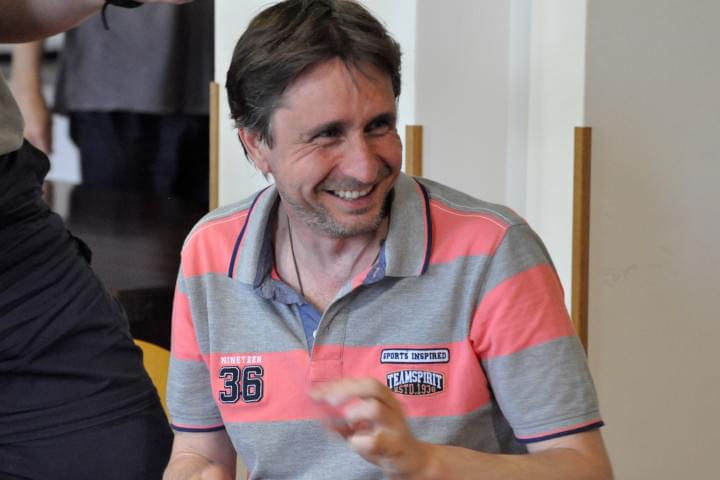
The road that led me into the Society was long and marked by turns that were sometimes difficult and unexpected. My earliest memories take me back to the cities where my family lived as we followed my father’s work. With my two younger sisters, we were first in Pisa, then London and finally Rome, where I grew up from the age of ten. That period of travelling has remained within me, and today I feel that this love of distances and difference continues to characterise my life as a Jesuit.
Scouting, exile and searching
During adolescence I came to know parish and neighbourhood life, and scouting was among the activities that shaped and taught me most. At seventeen I experienced a crisis of faith that opened a long and difficult period of searching and “exile”. Only seven years later, at the age of twenty-three, while studying medicine, I drew close again to the Lord and his Church, not without the help and accompaniment of the Jesuits at the University Chapel. After completing my studies and a profound experience of catechesis with the Franciscans of San Lorenzo al Verano, I asked the Jesuits themselves to accompany me in my vocational discernment. This path of searching led me first to Villa San Giuseppe and finally to the novitiate.
Entering the Society. In Africa, the vocation to priesthood
With profound joy, at twenty-eight I began my life as a religious in the Society. After the novitiate, which for me was a peaceful period of growth and deepening of my vocation, I began philosophy studies while serving with the Antonianum Youth Centre group “Doctors for Bosnia”. In this way I drew closer to the call to mission that led me to leave for Chad for my regency. In Africa I worked for two years as a doctor, and among the sick and the great poverty I encountered, my vocation to priesthood was born. Precisely when I realised that human strength could do no more, I began to abandon myself to the gentleness and strength of the Lord, who never abandons his poor. In hospital, while caring for bodies wounded by the suffering and humiliation of illness, my understanding and love of the Eucharist deepened: the mystery of the dead and risen body of Jesus the Servant.
Study and the strength of fraternal life
After returning from Chad, I began theology studies at the Centre Sèvres in Paris. The experience of study meant entering a dimension of self-denial and renouncing direct service to the poor. Providentially, in the insertion community at Saint-Denis I was able to experience a simple and fraternal way of life that allowed me to remain in contact with local people and migrant communities. Their faith enabled me to overcome joyfully the inevitable dryness of the years of theology.
Apostolic life
At the end of my years of theological study came priestly ordination and the first mission entrusted to me by the Provincial. I therefore began working in missionary animation for the MAGIS Foundation. I visited several countries in Africa, India and the Middle East, and contributed alongside lay people, collaborators in Christ’s mission, from whom I learned so much and with whom I felt a deep harmony and friendship.
After five years, I devoted myself to the Spiritual Exercises at the Ignatian Centre for Spirituality.
A new ministry thus opened that profoundly shaped my identity as a Jesuit and priest.
My most recent mission was to lead the Pope’s Worldwide Prayer Network and EYM in our Province. I dedicated myself to making the immense riches of Ignatian spirituality accessible to simple people, children, and young adults. A deep sense of joy and gratitude fills me every time I see the Spirit at work in the heart of every person I meet.
After serving at the MAGIS Foundation and as Socius to the Provincial, as director of the Pope’s Worldwide Prayer Network and national coordinator of the Eucharistic Youth Movement, I try to share the beauty and depth of the Society’s Mission, even though that beauty may at times be disfigured by our limitations, our fears and our egos.