Integration and Education: Pope Leo XIV Addresses the Association of Jesuit Colleges and Universities
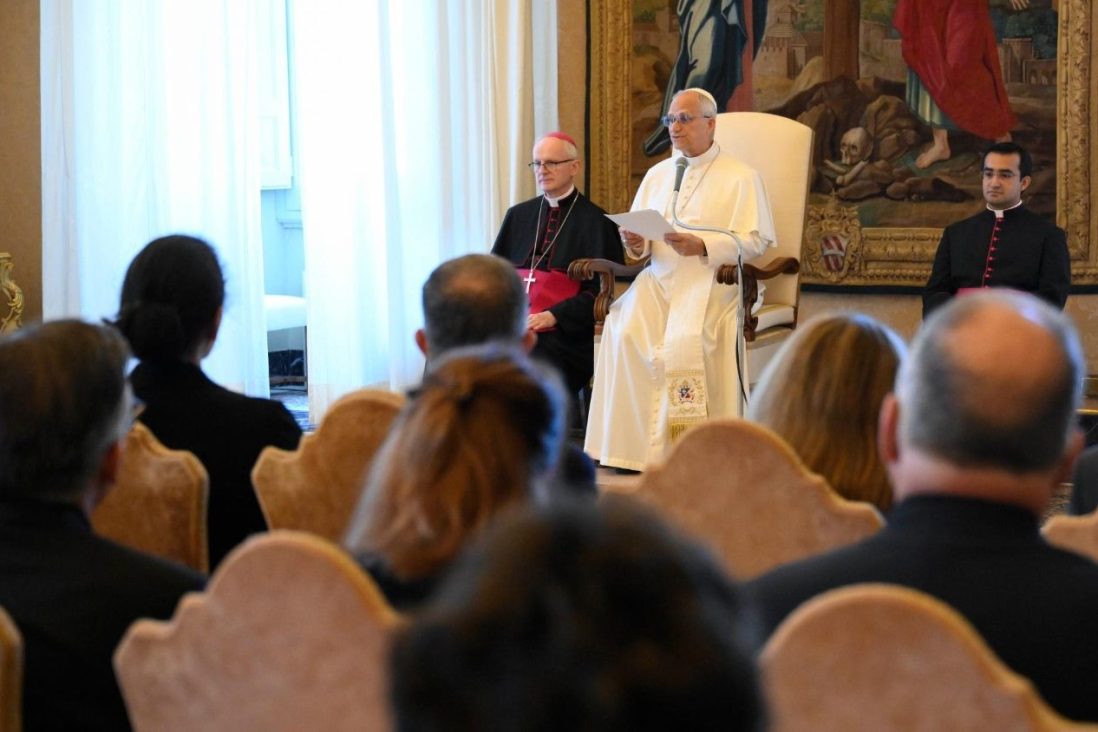
Addressing the presidents and representatives of the Association of Jesuit Colleges and Universities on 25 June, Pope Leo XIV reflected on the challenges facing higher education in a rapidly changing world, while highlighting what he described as a “palpable and growing hunger for God” among young people.
Speaking to leaders of Jesuit colleges and universities in North America, the Pope encouraged them to draw inspiration from the Society of Jesus’ four Universal Apostolic Preferences as they respond to today’s social, cultural and technological challenges.
Acknowledging increasing secularisation, political indifference to the poor and migrants, environmental degradation and the profound impact of artificial intelligence, Leo XIV stressed that Jesuit institutions have a distinctive mission to form students intellectually and spiritually. He encouraged universities to continue offering the Spiritual Exercises on campus, noting that many young people and adults are rediscovering the Christian faith after periods of distance from God. The discernment fostered by the Exercises, he said, equips students and educators alike to remain attentive to the promptings of the Holy Spirit.
Reflecting on the second Universal Apostolic Preference – walking with the poor and the excluded – the Pope urged Jesuit institutions not only to educate students about injustice but also to become “powerful channels” for systemic change through models rooted in solidarity and the common good. He emphasised the importance of expanding access to higher education for migrants, refugees and those from disadvantaged backgrounds, enabling them both to integrate more fully into society and to enrich academic communities through their diverse experiences.
Turning to the accompaniment of young people, Leo XIV described Jesuit universities as places where hope can flourish through study, friendship, dialogue, service and prayer. Encounters with the thought of great scholars, past and present, help students imagine a more just future, while the Resurrection of Christ remains the ultimate source of Christian hope.
The Pope also renewed his call to care for our common home, encouraging Jesuit campuses to become living examples of ecological sustainability, simplicity and gratitude for God’s gifts. “In this way,” he said, “your institutions will be able to instruct by example, and not solely in theory.”
Finally, he addressed the growing influence of artificial intelligence, urging universities to engage critically with both its opportunities and its risks. Jesuit higher education, he said, has a special responsibility to apply the principles of the Church’s Social Doctrine in ways that are relevant and effective in the context of the digital revolution.
Concluding his address, Pope Leo XIV thanked the university leaders for their commitment to Jesuit education and encouraged them to continue the Ignatian tradition of forming “men and women for others”.