New steps in safeguarding across the Province
The “Cammino di verità” (Journey of Truth) carried on several reflections and highlighted the urgency of translating what had emerged into concrete action. Work continued over the summer, with the development and introduction of tools for listening, prevention and reparation. Among the steps taken: the opening of a new listening centre for the Euro-Mediterranean Province and the launch of a restorative justice process, alongside ongoing training and prevention activities.
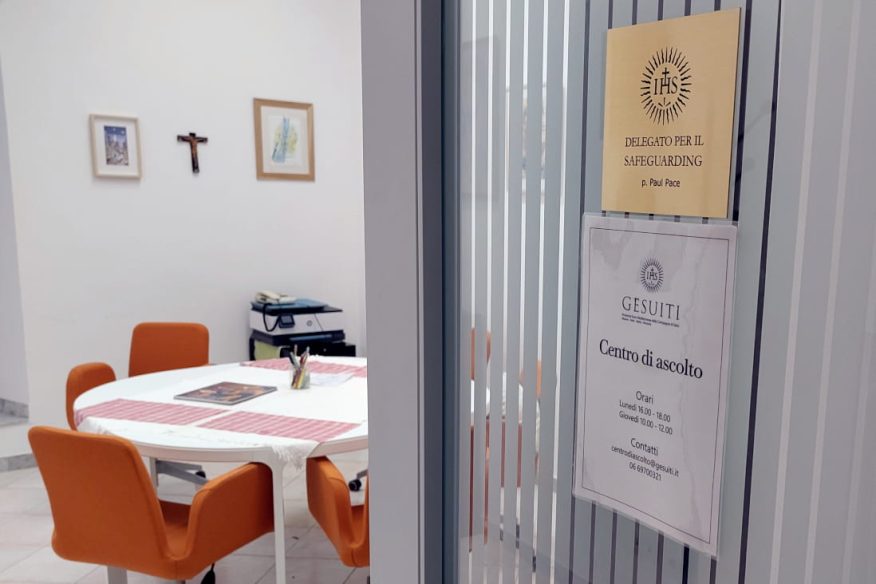
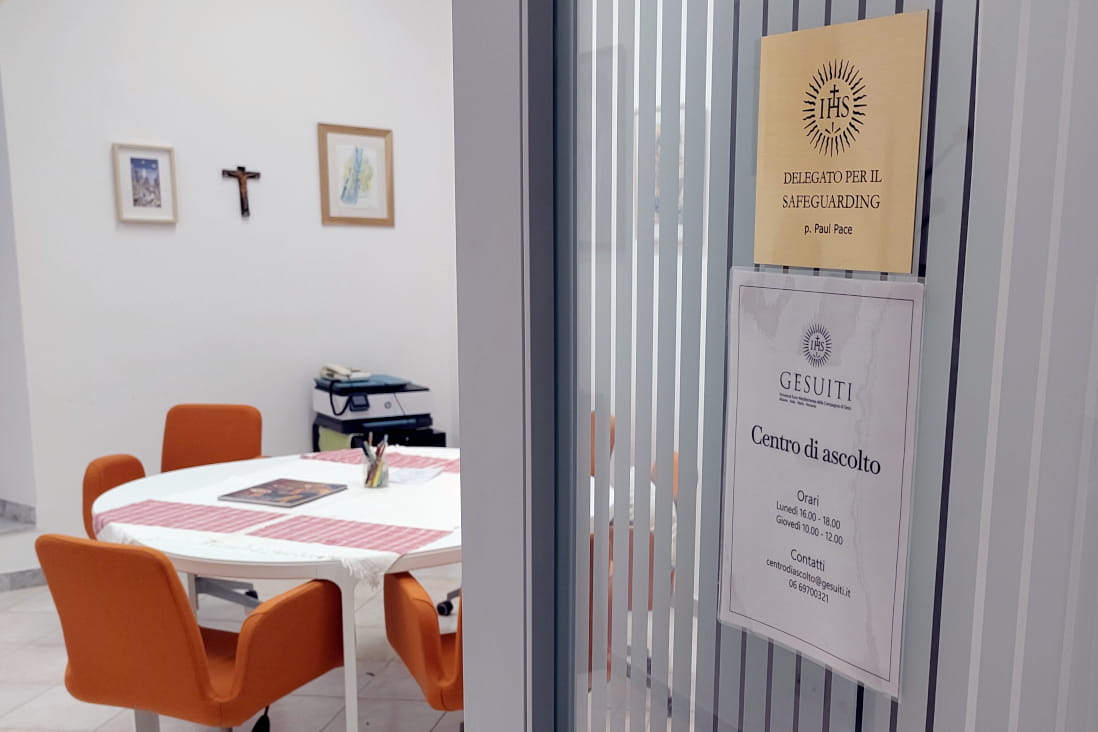
A new EUM listening centre
The listening centre for people who have experienced abuse by religious, collaborators or volunteers belonging to the Euro-Mediterranean Province of the Society of Jesus will open on 26 October.
The centre offers a confidential space for listening and guidance to anyone wishing to share their experience, receive information and learn about the support available and the options offered by the Province.
Opening hours
- Monday, 4.00–6.00 pm
- Thursday, 10.00 am–12.00 pm
Via degli Astalli, 16 – Rome
Appointments are preferred.
For information and appointments: centrodiascolto@gesuiti.it
A restorative justice process
The restorative justice process announced before the summer has now entered its operational phase. It relates to events that have left deep and painful marks on the history of the Movimento Eucaristico Giovanile- Eucharistic Youth Movement (MEG- EYM) from the 1990s to the early 2000s, and continues the work undertaken through the “Cammino di verità” between 2024 and 2025.
The process is being led by a team of four experienced mediators, independent of the Society of Jesus, with extensive experience in restorative justice.
- Anna Cattaneo has worked as a penal mediator since 2005 and is listed on the Italian Ministry of Justice register as an expert restorative justice mediator and trainer. She is president of InConTra ETS – Restorative Justice and Humanistic Mediation, and coordinates the Restorative Justice Centre in Bergamo.
- Filippo Vanoncini has worked as a penal mediator since 2005 and is listed on the ministerial register as an expert mediator and trainer. He is vice-president of InConTra ETS – Restorative Justice and Humanistic Mediation, and works with the Restorative Justice Centres in Bergamo and Brescia.
- Maurizio Gozzi has worked as a penal mediator since 2015 and is head of the Anfora Restorative Justice Centre in Reggio Emilia. He has over twenty years’ experience as a manager of third-sector services supporting people and is chief executive of 3C Salute, a social cooperative based in Reggio Emilia.
- Caterina Pongiluppi has worked as a penal mediator since 2015 and is listed on the ministerial register as an expert mediator and trainer. She coordinates the Anfora Restorative Justice Centre in Reggio Emilia, holds a PhD in Criminal Law, and teaches Juvenile Law and Restorative Justice at the University of Modena and Reggio Emilia.
Initial individual meetings have already begun with those taking part in the process. This first stage gives each person the opportunity to share their experience, questions and needs, at their own pace and with complete freedom to decide whether to participate.
Restorative justice provides a space in which to revisit painful events through listening and dialogue. It seeks to foster awareness of the harm suffered and caused, acknowledge the dignity that has been violated, and identify possible ways of repairing personal and communal wounds.
Depending on the needs and wishes of those involved, the process may continue through mediation meetings between two or more people or through group discussions. The format is agreed together with the participants.
Meetings are facilitated by at least two mediators, who work according to the principles of independence, impartiality and equal consideration for all parties. Their role is to facilitate dialogue and create the conditions for open and constructive engagement.
La partecipazione è libera e volontaria. Sono garantite la riservatezza di quanto condiviso durante gli incontri e la tutela della sicurezza e della dignità di tutte le persone coinvolte.
For further information and to contact the mediators directly: equipeRJ@proton.me
Read the description of the process written by the mediators (Italian, .pdf, 112Kb)
Training, prevention and accountability
The safeguarding team, formed by Fr Paul Pace SJ, psychotherapist Betty Varghese and Dr Sara Staiano, a safeguarding specialist, has continued its work to strengthen a culture of safe environments across the Province. This has included training sessions, a review of safeguarding resources, and the development of new approaches to listening and reparation.
Training initiatives have included a session on safeguarding as part of the formation course for Superiors, a day dedicated to Novices, and a specific programme developed within the Province’s school network.
The revision of the final draft of the safeguarding manual is also nearing completion. The manual will provide guidance and practical tools for preventing and responding to abuse across the Province’s different settings, including communities, networks and works.
Alongside this, work continues to examine the Final Report and to reflect on how to follow up on its findings and take responsibility for the issues they raise. A policy on compensation has also been developed as a means of translating the acknowledgement of harm caused into concrete action.